Those Orange Things In The Back
Timpani For Percussionists
Timpani Grips
Much like any other percussion instrument, how you hold the timpani mallets is an important part of how you play the instrument. And much like traditional vs. matched grip on snare drum, or Musser and Stevens grips on mallet percussion, there are different ways to hold timpani mallets. There are 3 commonly accepted grips: the French, the German, and the American.
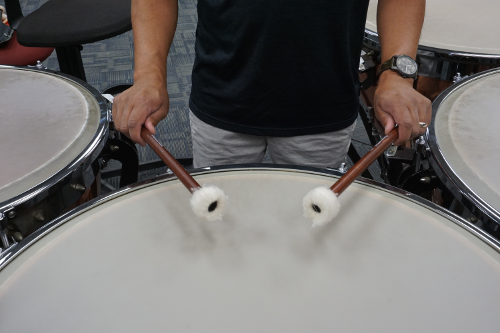 The German Grip is essentially identical to matched grip on snare drum or mallet percussion. The palms face down and the thumbs are parallel to the stick, turned inward towards the center. The sticks angle towards each other. This grip provides clarity and extra articulation on downstrokes and staccatos, but doesn't usually offer the same control as the French grip.
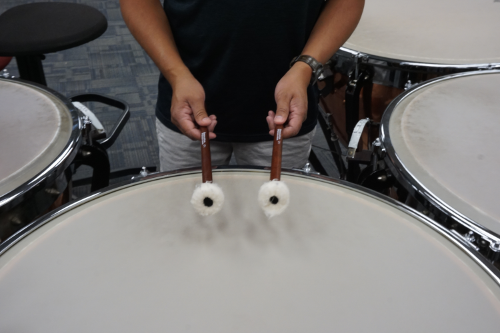 The French Grip places the thumbs on top of the stick and has the sticks parallel to each other Most professional timpanists use this grip because it usually offers the most finesse and the most control during rolls.
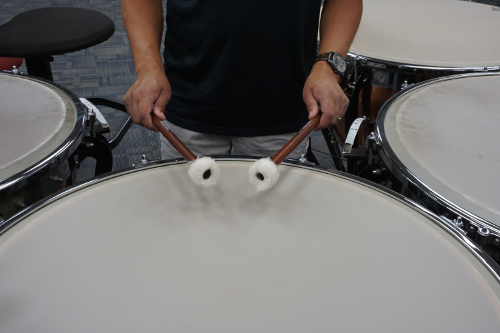 The American Grip splits the difference between the French and German grips, with the thumbs being about halfway between the side and the top of the stick.
This video shows quarter notes in each of the three grips
Once you're comfortable with the basic grips, it's time to learn how to hit the timpani. You may also wish to explore how to read music for the timpani.