Those Orange Things In The Back
Timpani For Percussionists
Timpani for quad players
Timpani in concert band and orchestra fulfils a role somewhere between the quads and tonal bass drums in marching band. The timpani often maintain the pulse and the beat, but they also reinforce the bass line and the harmonies too. If you've already played quads, you know that each drum on the quads corresponds to a different space on the musical staff. Timpani is a similar idea, except now you're reading in bass clef, and the notes aren't always in exactly the same place. If you're not familiar with bass clef, check the reading timpani music page.
If you're primarily a quad player, you may wish to set up your timpani in the American system, which puts the drums in order from largest to smallest with the largest drum on your left. This will put the biggest timpano in the same place where the largest drum is on the quads. The opposite arrangement would the German system, which puts the largest drum on the right.
Especially in music for younger ensembles, timpani tends to be tuned to the 5th and 1st notes of the key. In concert Bb, that would be F and Bb. In more advanced music involving more timpani, the drums are often tuned in arpeggios.
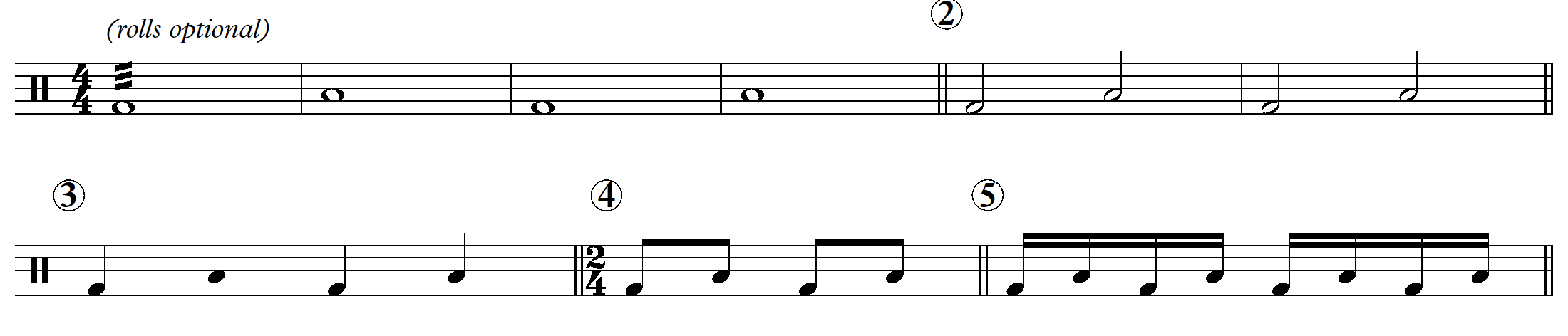
Consider the following simple pattern on quads, just using the lowest two drums-
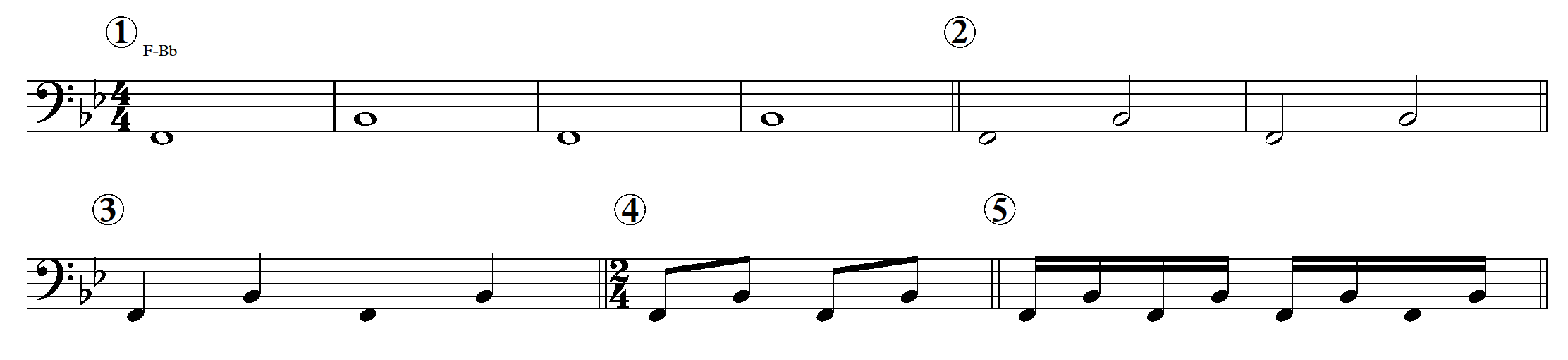
That same pattern on timpani, in the key of Bb, would look like this-
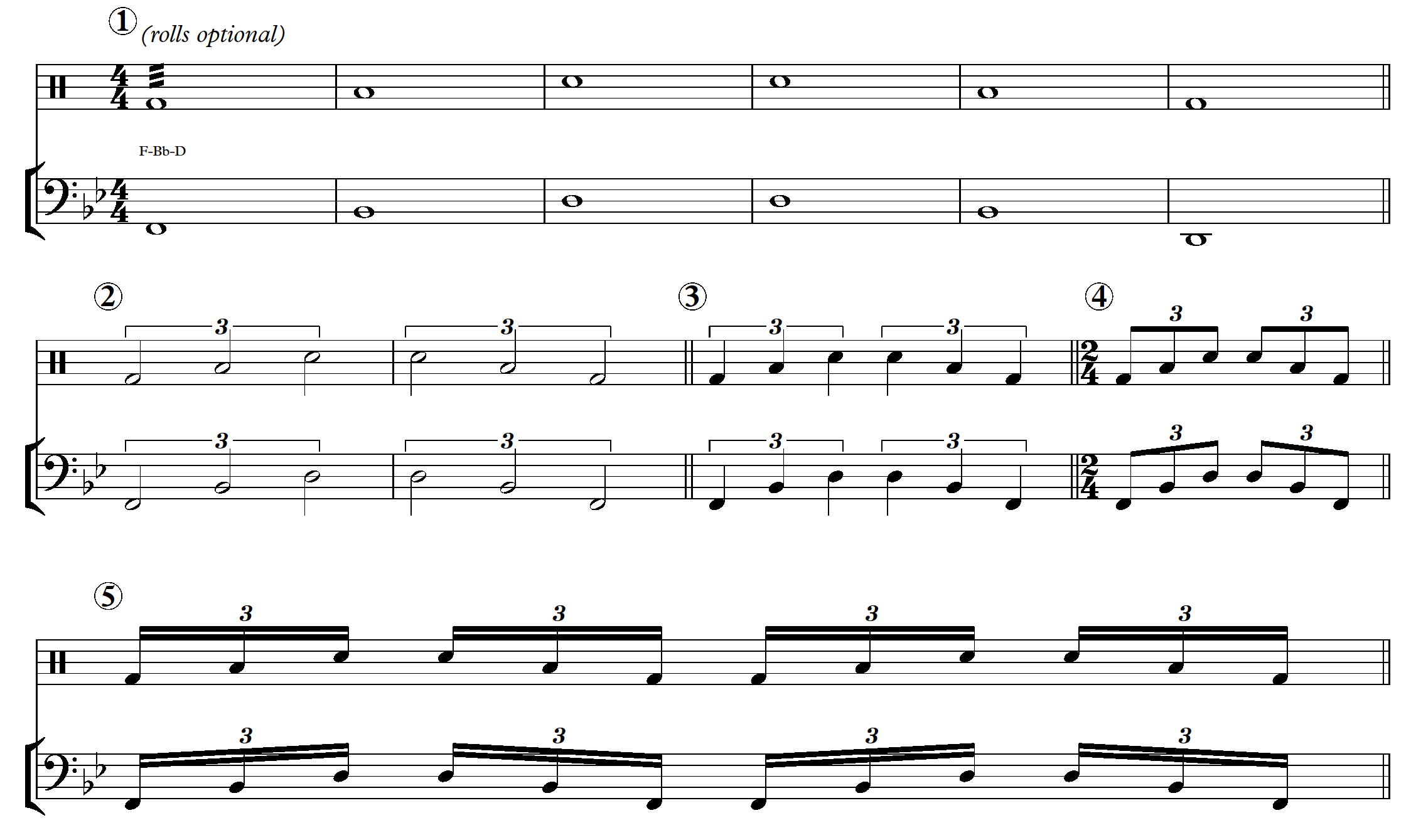
Here are a few other exercises, shown first as quad parts, then on timpani-
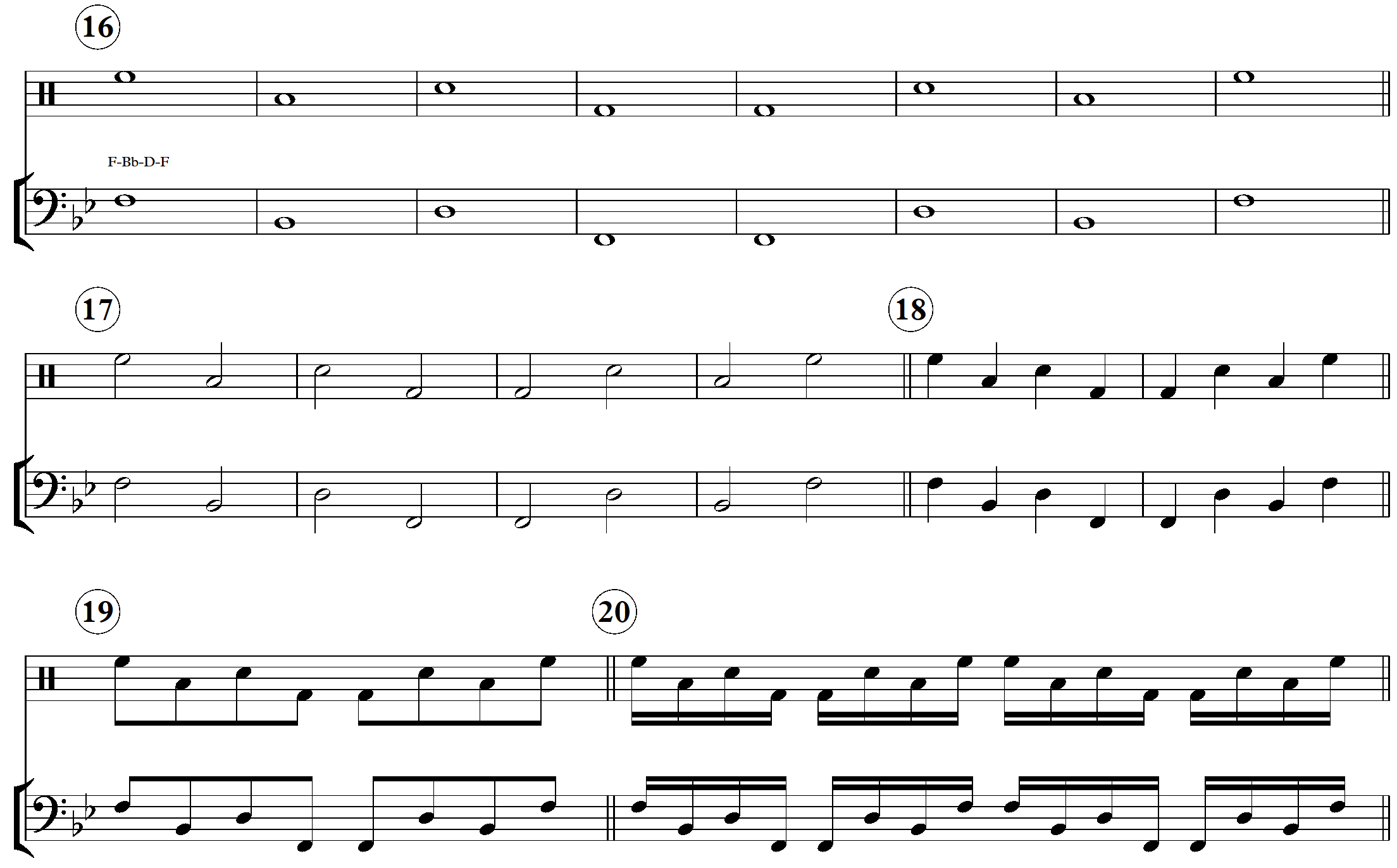
These videos show the musical examples on this page, first on quads, then on timpani
You can download all of the musical examples on this site as a pdf here. This includes more examples for quads, in addition to the exercises for snare drum, bass drum, and mallet percussion., all presented with their timpani equivalents immediately below. You may also wish to check out the care and maintenance page.