Those Orange Things In The Back
Timpani For Percussionists
Timpani for mallet players
If mallets-bells, xylophone, marimba, or vibraphone-are your primary percussion instrument, the learning curve going to timpani shouldn't be too bad. Matched grip, the basic two mallet grip, is exactly like German grip for timpani, and the idea of reading notes on a staff is something you already do. The difference is that physically the notes will be in different places (although there's less of them at a time), and you'll be reading in bass clef rather than treble. If you've played more advanced marimba music you may already be familiar with the bass clef, but if not, here's a guide
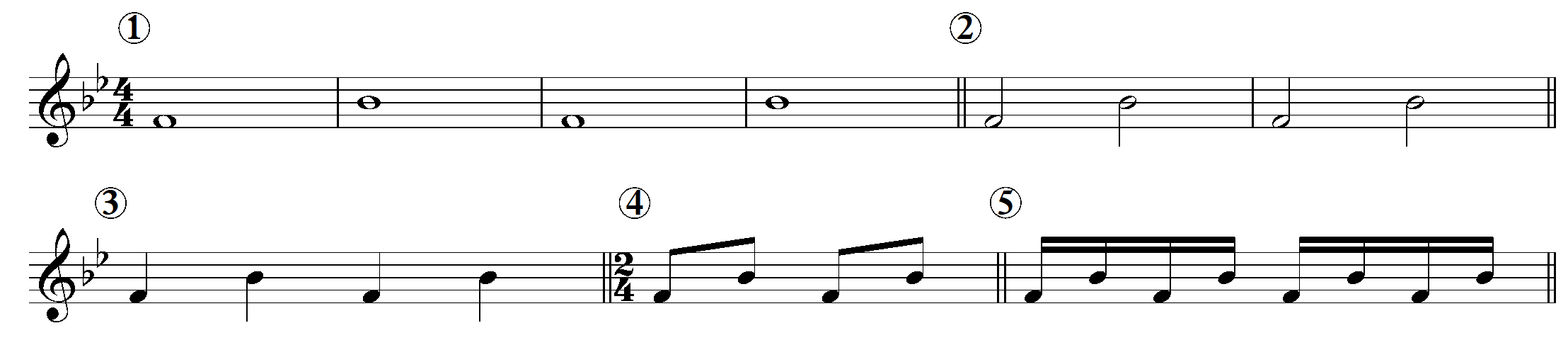
Timpani, especially in music for younger bands, tends to play the first and fifth notes of the key. So, for example, in a song in Bb major you'd tune the biggest drum to a low F, and the second biggest drum to a Bb. Here's what a pattern on those two notes would look like like for bells-
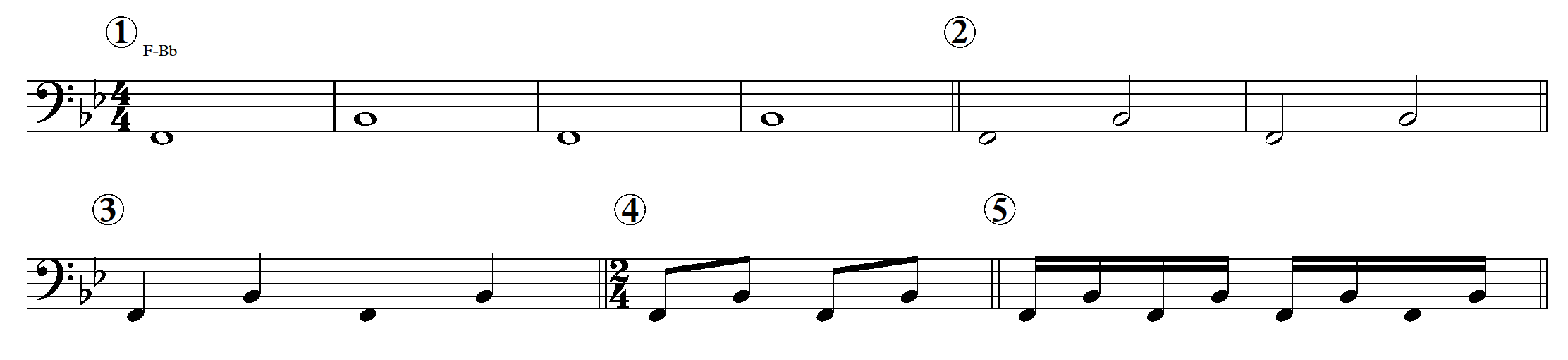
And now here's the same notes in bass clef, using the biggest two timpani-
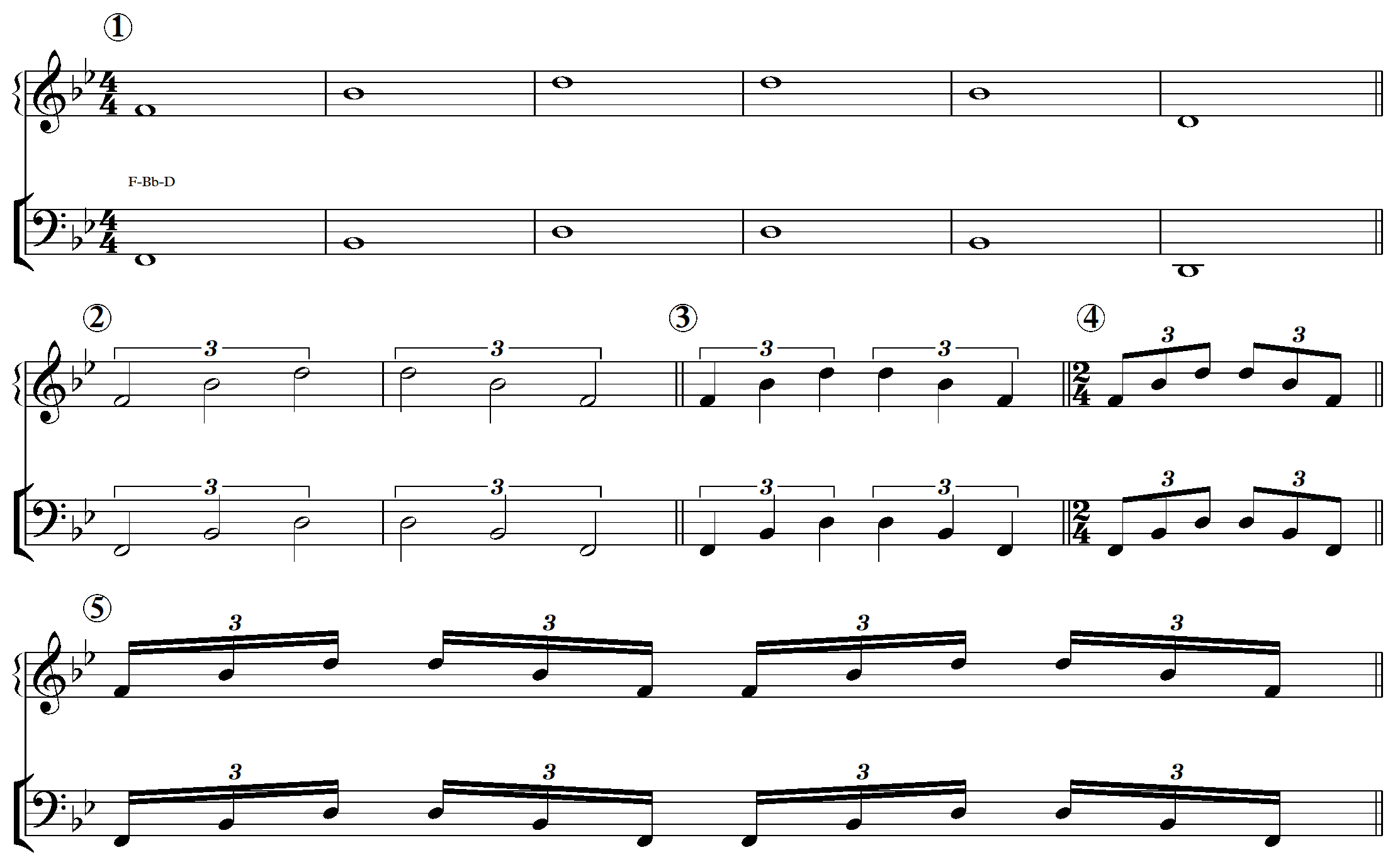
Here are a few other exercises, shown first as mallet parts, then on timpani-

These videos show the musical examples on this page, first on marimba, then on timpani
You can download all of the musical examples on this site as a pdf here. This includes more examples for snare drum, in addition to the exercises for quads, bass drum, and mallet percussion., all presented with their timpani equivalents immediately below. You may also wish to check out the care and maintenance page.