Those Orange Things In The Back
Timpani For Percussionists
Basics of hitting the timpani
How to arrange the timpani
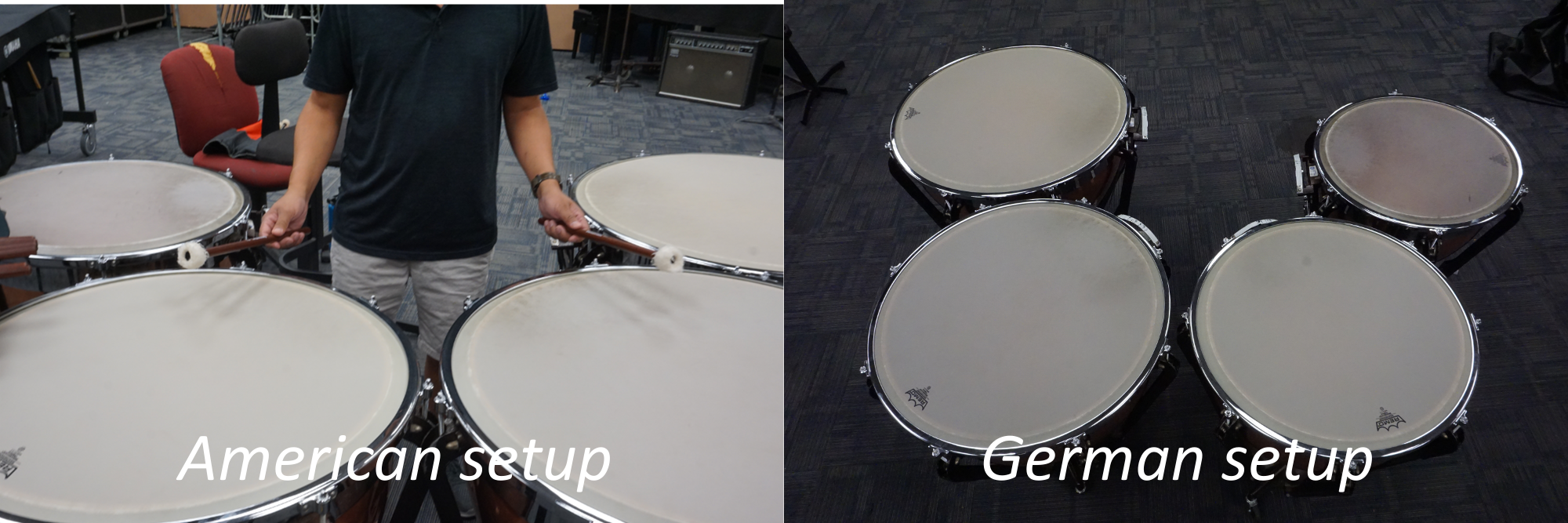
Once you've got a good grasp on the basics of taking care of the timpani and reading music for the timpani it's time to get started playing them. Timpani are almost always arranged in order by size. The American setup places the largest drum on the player's left, while the German setup is the exact opposite, placing the smallest drum on the player's left. Most players will either stand or sit on a tall stool behind the drums.
Playing area-where to hit the drum
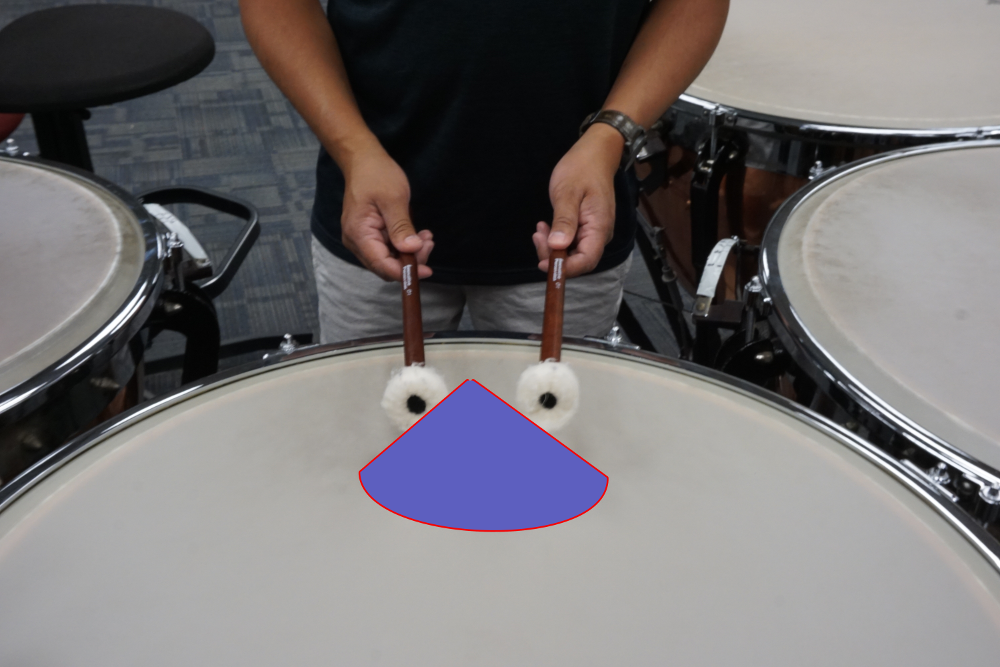
Unlike, say, a snare drum or a bass drum, timpani are always hit close to the rim near the player, rather than in the center. The blue region represents the typical target area for your sticks.
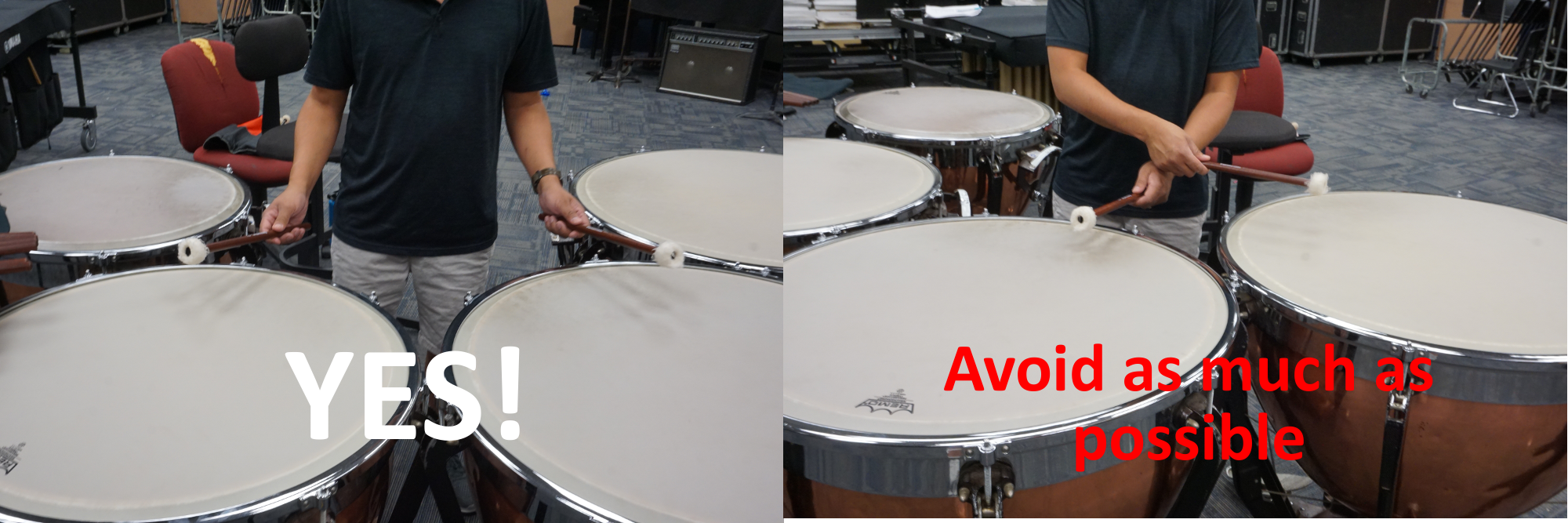
Sticking on timpani should be alternate sticking-that is always following a right with a left, or a left with a right, as much as possible. Double and triple strokes are rarely used on timpani, usually only to facilitate difficult changes between different drums. As pointed out by Lauretta Main, percussion specialist for Klein Collins High School in Klein, Texas, sticking rules for timpani are similar to sticking rules for mallet percussion. Assuming the American setup of largest drum on your left, highest drum on your right, if you're moving from a lower drum to a higher drum lead with your right hand, while if you're going from a higher drum to a lower drum, lead with your left. Try to avoid cross sticking (having to move your left arm over your right, or vice versa) as much as possible.
Rolls on timpani
Unlike other percussion instruments, which can have many kinds of rolls (such as buzz, double stroke, and triple stroke), rolls on timpani are always single stroke rolls-one stick right after the other. According to Britt-marie Foreman, director at Severance Middle School in Severance, Colorado, your roll speed should be slower on bigger drums and faster on the smaller drums. You always want to use just enough roll speed to get the drum to resonate evenly, rather than going as fast as possible.
Dampening
You'll quickly notice that if you hit a timpani right, the sound resonates for a long time. Sometimes that's exactly what's called for, but not always. When presented with shorter notes, or staccato passages, or when you have to end with a quick cutoff (among other things) you'll need to dampen (stop the sound) the drums by quickly putting your hands on the drum head.
This video demonstrates everything on this page-the basics of the French and German grips, appropriate playing area for the timpani, how to perform timpani rolls, and how to dampen during playing-
When you have a good grasp on hitting the drum and doing a good single stroke roll, it's time to look at musical examples, whether you're most comfortable with snare drum, bass drum, marching quads, or mallet percussion.