Those Orange Things In The Back
Timpani For Percussionists
Parts Of The Timpani
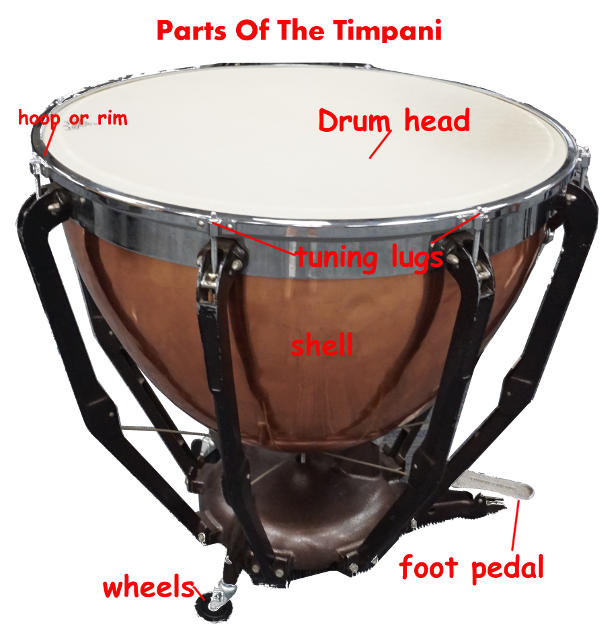
- the head-much like most other drums, the head is the part of the timpano that you hit. These were traditionally made from calfskin or goatskin; in the modern era most heads are usually made from plastic in school environments. However, many professional players continue to play on natural skin heads, and some even make their own!
- the lugs-also similar to most other drums, these need to be evenly adjusted to give good tension on the head
- the rim or hoop-a large metal ring that holds the head in place
- the tuning gage (not shown)-many timpani have a gage on the side with a needle or pointer that indicates what letter the drum is tuned to, based on how far the foot pedal is pushed down
- the shell-is the copper or wooden bowl that forms the main body of the drum
- the foot pedal or tuning pedal-the foot pedal changes the pitch of the timpano. On most timpani your foot pushes forward to release foot pedal and rocks back to lock it into place.
- the wheels-most timpani have 2 or 3 wheels to make rolling them from place to place easier.
the sticks-and while not exactly part of the timpani themselves, the sticks-the timpani mallets are a vital part of the instrument. Timpani mallets typically look like this-
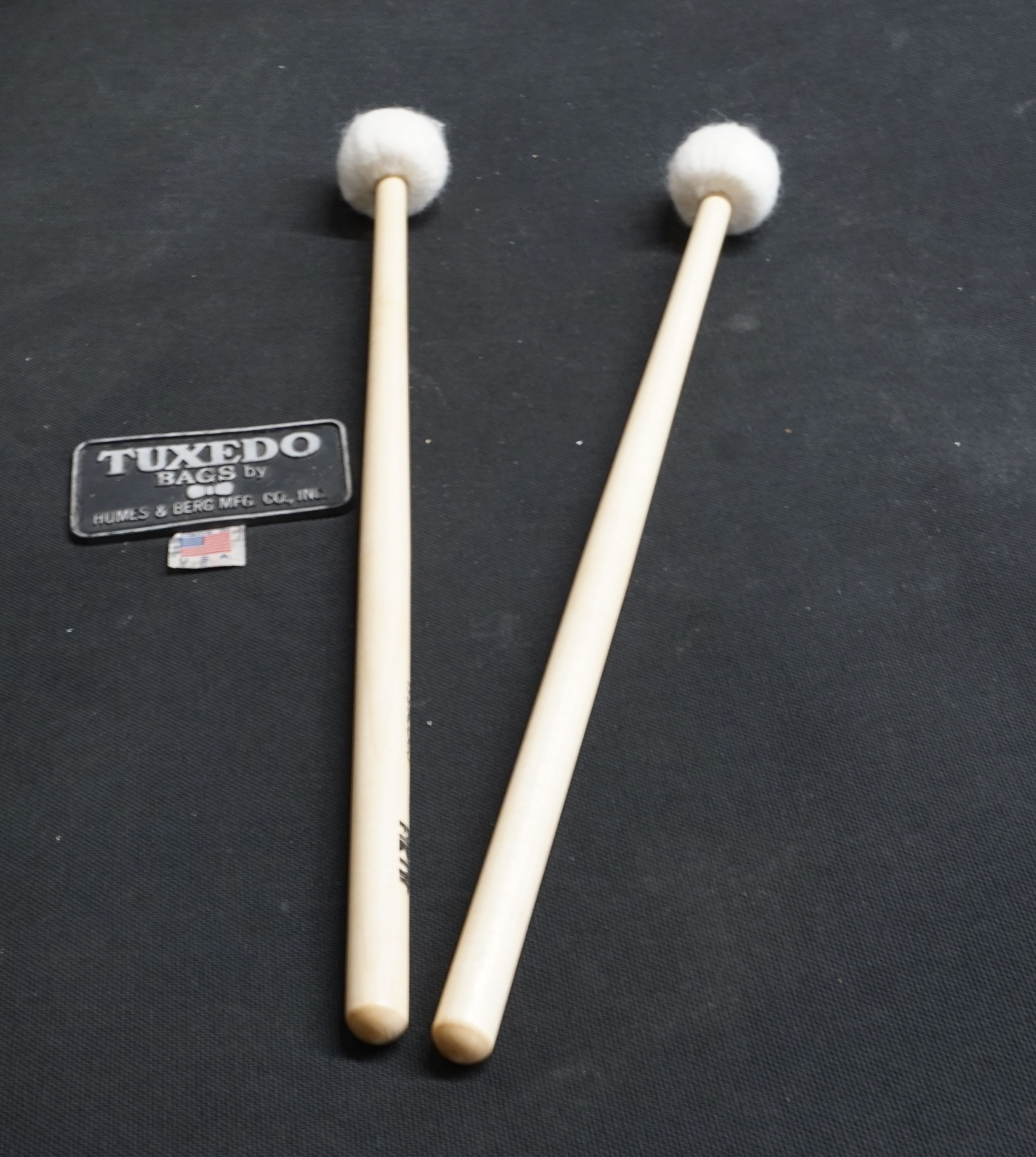
Much like bass drum beaters, the heads of the mallets are usually made out of felt wrapped around a wooden core, while the handles are generally made out of wood. However, there are many different variations of stick, with different hardness or softness, different materials for the heads (including leather, cork, or even wood), and different materials for the handles-aside from various kinds of wood, handles are occasionally made from aluminum or even carbon fiber.
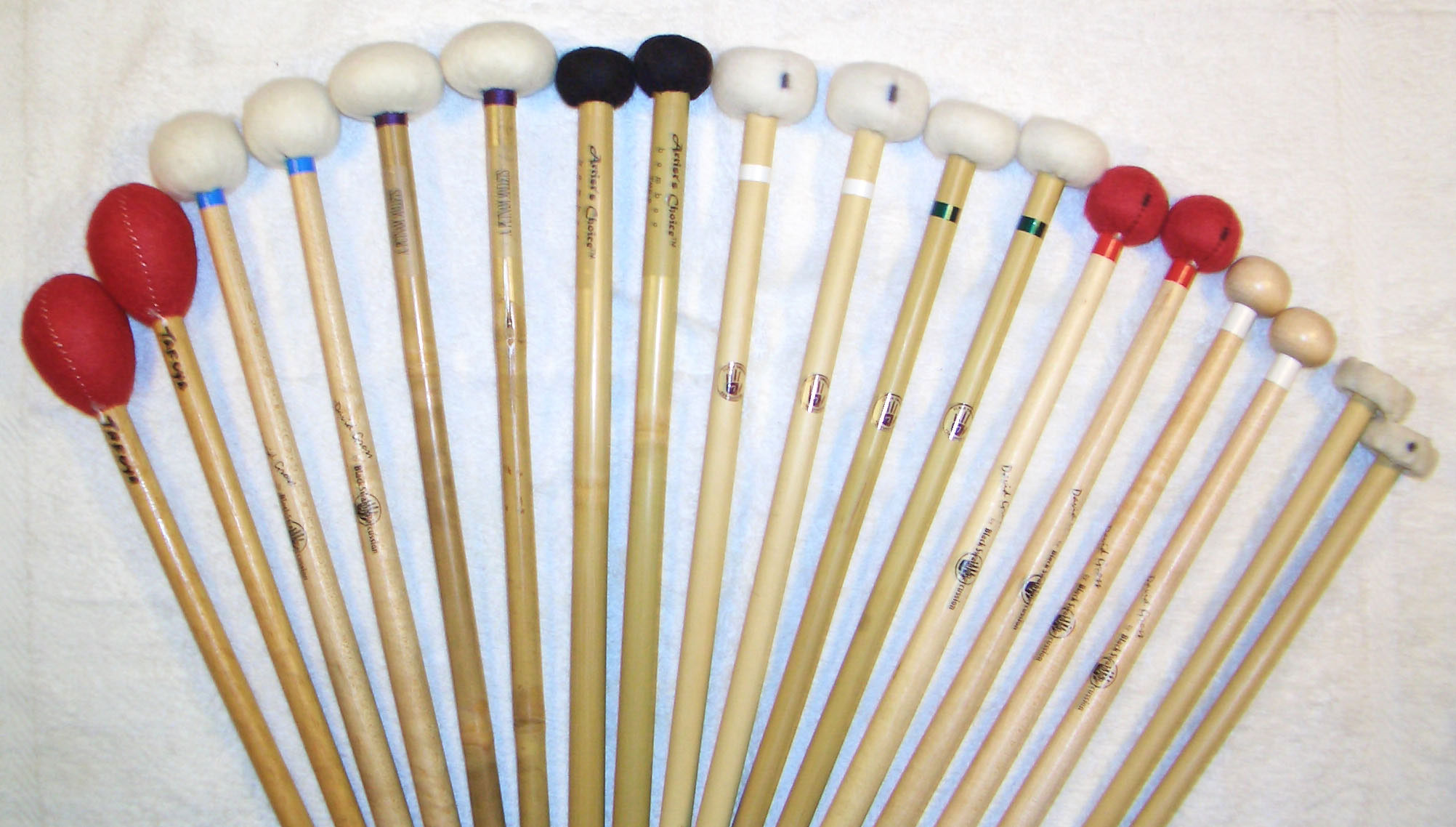
Professional timpanists can own dozens of pairs of mallets for different tone qualities and effects. As a younger musician you probably want to own one good pair of timpani mallets, and as you develop you may want to add a second pair, most likely of a different hardness.